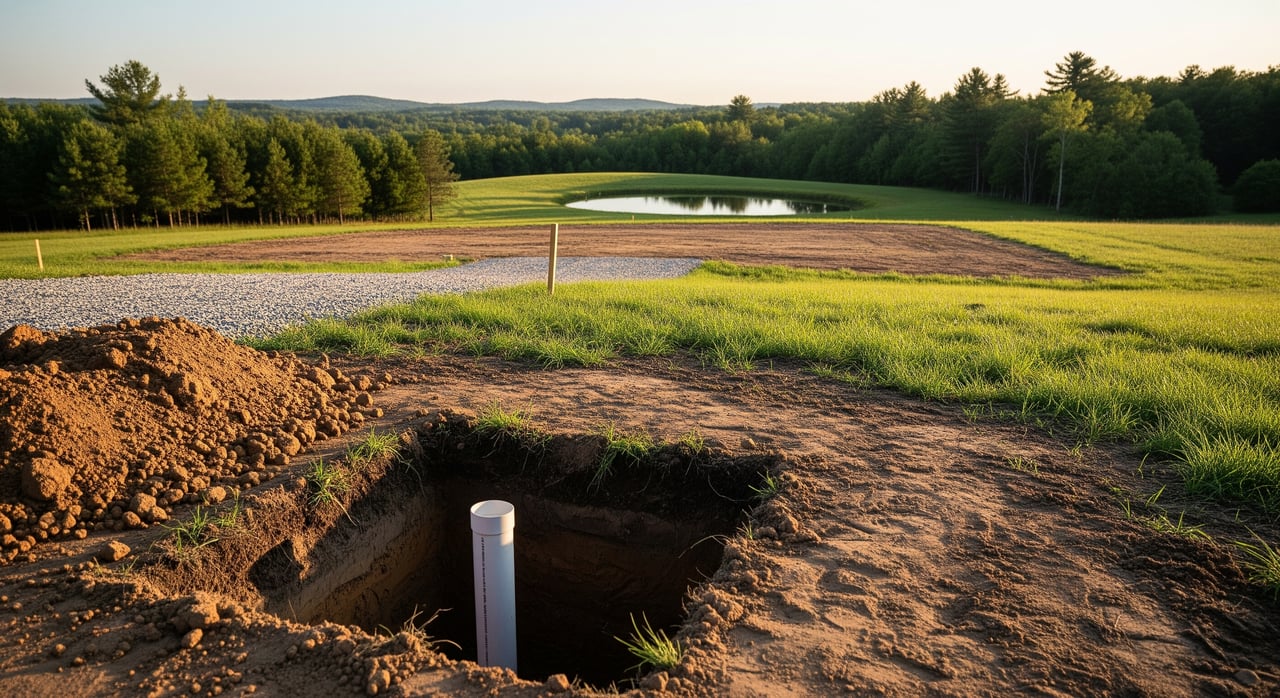
Thinking about buying land around Big Rapids and wondering if you can actually build on it? The answer often starts with a perc or soil evaluation. These tests tell you whether the ground can safely handle a septic system, which is essential for most rural parcels in Mecosta County. In this guide, you’ll learn what a perc test is, who does it, how the process works, and how results affect your build plan and budget. Let’s dive in.
Perc tests and soil evaluations, explained
A percolation test measures how quickly water moves through soil. Results are usually reported as minutes per inch (MPI). Faster rates mean water drains quickly. Slower rates mean it drains slowly.
Today, many Michigan counties prefer a full soil and site evaluation over a perc alone. A complete evaluation describes soil layers, notes any restrictive layers like clay, checks the depth to seasonal high groundwater, and recommends system types. Together, these details help the county decide if a septic permit can be issued and what kind of system is allowed.
Why this matters in Mecosta County
Much of Mecosta County is rural. Many homes rely on on-site septic systems. Local soils vary from sand and loam to clay. Seasonal high groundwater, wetlands, and proximity to lakes and streams near Big Rapids all affect whether a parcel can support a septic system.
A positive evaluation can clear the way for a standard system. If soils are marginal, you may need an engineered system. In rare cases, a parcel may not be suitable for a typical dwelling without significant changes or mitigation.
Who does the testing and permitting
County role
The Mecosta County Health Department’s Environmental Health division is the local authority for septic permitting. The county reviews site and soil evaluations, approves system types, issues permits, and inspects installations. Your first step for parcel-specific rules is to contact the county’s environmental health office.
State guidance
Michigan’s Department of Environment, Great Lakes, and Energy (EGLE) provides statewide technical guidance and registration standards for onsite wastewater pros. Counties apply these rules locally.
Professionals involved
- County sanitarians or environmental health specialists may perform or review site visits and results.
- Private soil scientists, licensed septic designers, or registered installers often conduct soil and perc testing under county rules.
- Engineers design engineered systems when needed, such as mounds, sand filters, or aerobic units.
The typical process and timeline
Every parcel is unique, but most evaluations in Mecosta County follow a similar path. Always confirm specifics with the county before you schedule work.
Step-by-step overview
- Pre-application contact. You or your agent contacts Mecosta County Environmental Health for guidance and any required forms.
- Site planning. Identify a proposed house site and potential drain-field area that can meet setbacks to wells, property lines, basements, and water bodies.
- Field testing. A county sanitarian or private tester selects test locations. Soil pits are dug to inspect layers and groundwater indicators. Perc tests may be run to measure MPI.
- Documentation. The tester notes soil texture, color, mottling, depth to water, and limiting layers. Photos are often taken.
- Submittal and review. The full report goes to the county. The county confirms an approved system type or asks for an engineered design.
- Permit and build. You submit a final septic design and permit application. After installation, the county inspects and provides final approval.
Timing and seasonality
- Avoid frozen or flooded conditions. Percs done on frozen ground are not valid.
- Very wet soils can test slower than normal. Very dry soils can test faster. Many pros favor late spring or early fall, but always follow local guidance.
- Scheduling the test can take days to weeks. County review and permitting often add several weeks. Build this into your due diligence timeline.
How to read perc results
- Units: minutes per inch (MPI). Lower MPI means faster infiltration. Higher MPI means slower.
- Very fast rates can signal coarse soils. These may require special design or added separation to groundwater.
- Moderate rates are usually the easiest for standard gravity systems.
- Slow rates may require larger drain fields, pressure dosing, mounds, or advanced treatment. Extremely slow conditions may not work for a conventional system.
Important: MPI is only one factor. Depth to seasonal high water, restrictive layers, slope, and distance to water bodies often drive system choice and sizing more than a single number.
Buildability, septic options, and costs
Possible outcomes
- Septic-permittable. A suitable area and positive evaluation usually allow a standard permit, subject to setbacks and sizing.
- Engineered system required. Marginal soils may need a mound, sand filter, aerobic unit, or pressure dosing.
- Layout changes. You might need to shift the house site or drain-field location to meet setbacks or avoid poor soils.
- Not-permittable. In some cases, a typical dwelling is not feasible without major mitigation.
System types you may see
- Conventional gravity. Usually the lowest cost when soils and separation to groundwater are adequate.
- Pressure-dosed or pumped. Used to distribute effluent evenly or move it uphill.
- Mound systems. Used when shallow soils or high groundwater limit a standard drain field.
- Sand filters or aerobic treatment units. Used where higher treatment is needed or soils are tight.
- Holding tanks. Sometimes allowed under specific conditions. Often a last resort with strict maintenance needs.
Cost factors to plan for
- Testing and design. A private evaluation may run from several hundred to a few thousand dollars, depending on complexity.
- Installation. Conventional systems vary by site. Engineered systems can add tens of thousands over a standard install. Get multiple local quotes.
- Site work. Access for equipment, tree removal, grading, soil import, erosion control, and drainage all affect the budget.
- Long-term costs. Advanced systems may have more frequent maintenance and service contracts.
When to schedule tests during your purchase
- As early as possible. Contact the county early to confirm current requirements and whether any past evaluations are on file.
- Use a contingency. Include a soil or septic contingency in your offer so you can test the parcel and confirm permitability.
- Plan for season. Avoid frozen periods and consider typical county review times so you do not miss your build window.
Buyer checklist for Big Rapids land
Use this list to compare parcels and lower your risk.
Questions for the seller or listing agent
- Has a current soil or site evaluation been completed? If yes, when and by whom?
- Can you provide the full report with test-hole locations and any perc results?
- Was a septic permit issued or a design approved by the county?
- Are there recorded deed restrictions, easements, or covenants that limit septic placement?
- Are there known wetlands, floodplain areas, or high-water concerns on the parcel?
- If there is an existing septic system, are inspection and maintenance records available?
Actions to take as a buyer
- Contact Mecosta County Environmental Health for parcel-specific guidance and current forms, fees, and timelines.
- Hire a local soil scientist, septic designer, or installer familiar with Mecosta County rules.
- Add a septic permitting contingency to your offer.
- Request multiple quotes if an engineered system is likely.
- Confirm setbacks to wells, property lines, lakes and streams, structures, and basements.
Compare these items across parcels
- Perc or infiltration rate (MPI) and the date of the test
- Depth to seasonal high groundwater
- Soil profile and any restrictive layers
- Usable drain-field area in square feet
- Zoning and minimum lot size tied to septic approval
- Wetland or floodplain presence
- Access for construction equipment
- Likely system type and rough cost range
- Existing system condition, if present
Local resources to contact
- Mecosta County Health Department — Environmental Health division for local permits, policies, forms, and timelines.
- Michigan EGLE — Onsite Wastewater Program for statewide technical guidance.
- MSU Extension and the U.S. EPA — homeowner guides on septic systems and onsite wastewater basics.
Your next steps in Mecosta County
If you are serious about a parcel, line up two things early: a conversation with Mecosta County Environmental Health and a site visit with a local soil or septic professional. Use their feedback to frame an offer with the right contingencies and timelines. That way you protect your budget and keep your build plan on track.
Have questions about specific Big Rapids parcels or how to time your due diligence? Reach out to Steven A Elder for local guidance, referrals to trusted testers and installers, and smart offer strategies tailored to Mecosta County.
FAQs
What is a perc test and why do I need one in Mecosta County?
- A perc test measures how fast water drains in soil, which helps determine if a parcel can support a septic system and receive a permit for a home.
Who performs perc and soil evaluations near Big Rapids?
- County sanitarians, private soil scientists, licensed septic designers, and registered installers perform evaluations under county rules, with the county reviewing and permitting.
When is the best time of year to schedule a perc test?
- Avoid frozen or flooded conditions. Many pros prefer late spring or early fall, but follow county guidance and plan for review time.
How do perc results affect the type of septic system I will need?
- Moderate MPI often allows a standard system. Very fast or very slow rates, shallow soils, or high groundwater may require engineered systems like mounds or aerobic units.
Can a failed perc test be overcome so I can still build?
- Sometimes. Options include relocating the drain field, using an engineered system, or improving drainage, all subject to county approval and added cost.
Who usually pays for a perc test during a land purchase?
- It is negotiable. Many buyers pay for new testing if no recent, acceptable evaluation is available. Put the agreement in writing in your offer.
How long do perc or soil evaluations remain valid?
- Policies vary. Older evaluations may still be useful, but rules and site conditions can change. Confirm current acceptance with Mecosta County Environmental Health.