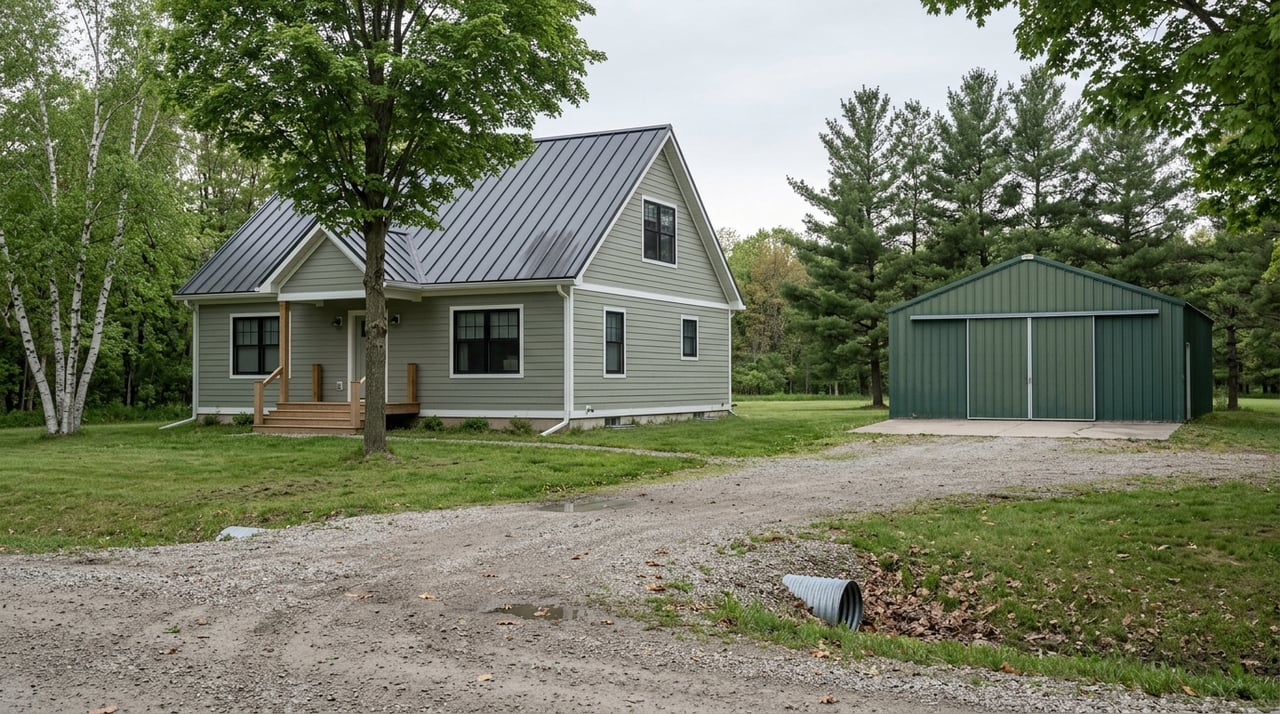
Dreaming about a few open acres near Howard City? It is easy to picture the barn, the garden, and the extra elbow room, but buying acreage or a hobby farm is very different from buying a house on a standard lot. You need to know how zoning, access, utilities, soil, and financing can affect what you can actually do with the property. This guide walks you through the key steps so you can move forward with more confidence. Let’s dive in.
Start With Location and Zoning
One of the first things you need to confirm is whether the property sits inside Howard City village limits or in a surrounding township. That matters because different offices may handle zoning questions, permits, and approvals.
According to the Village of Howard City zoning information, the village has its own zoning map and zoning process. For properties outside the village, Montcalm County explains that zoned townships handle their own zoning restrictions and zoning permits.
Why zoning matters for hobby farms
If you are planning to buy acreage for a small hobby farm, outbuildings, or future expansion, zoning is one of the biggest issues to review before you write an offer. A property may look perfect on paper, but the real question is whether your intended use is allowed.
Ask specifically about the house, barn, garage, sheds, fence lines, and any future additions. Montcalm County notes that zoning approval is required for building projects in zoned townships, and its building department requires permits for many common accessory structures.
Village properties may follow different rules
If the property is inside the village, the Howard City Planning Commission may hear zoning matters and variances under the village ordinance. That can be important if you are looking at a parcel with unique dimensions, an existing nonconforming structure, or plans that may need extra review.
Confirm Access Before You Fall in Love
A long driveway and a quiet setting can be appealing, but you should never assume that visible access equals legal access. This is a major due diligence item for acreage and hobby farm properties near Howard City.
Montcalm County’s private-road ordinance is designed to provide safe, convenient access to lots. It also requires permits for private roads and drives, along with maintenance agreements.
Check frontage, easements, and agreements
Before you move forward, ask the seller for the survey, parcel number, any recorded easements, and any private-road maintenance agreement. These documents can help you understand whether the property has legal access and who is responsible for maintaining it.
Montcalm County’s address office also helps with address assignment, private road naming, and parcel information. That can be useful when you are trying to verify how the property is identified and accessed.
Driveway permits matter too
If the driveway connects to a county road, the Montcalm County Road Commission says a permit is required for new driveways and other work in the right-of-way. If the parcel fronts a state trunkline, MDOT handles that permit instead.
That means you should ask early whether the existing driveway was permitted, or what will be required to install a new one. A property with acreage is not always simple when it comes to road access.
Understand Water, Sewer, Septic, and Wells
Utilities are another major difference between a standard home purchase and a land-focused property purchase. In and around Howard City, service options can change depending on whether the property is inside the village or outside it.
The village states that Howard City provides water and sewer services. For properties outside village utility service, you may need to verify private well and septic options through the Mid-Michigan District Health Department.
Start septic review early
If you are buying vacant land, do not wait until the last minute to look into septic feasibility. The health department’s application instructions require parcel details, a site sketch, and marked or staked corners and roadside location markers before evaluation can move forward.
That is a good reminder that septic review can take planning. If your dream is to build a home with room for gardens, animals, or a workshop, it helps to know early whether the site supports that plan.
Existing septic systems still need attention
If the property already has a home on it, ask about the septic system’s age, maintenance history, and most recent service. The Mid-Michigan District Health Department says homeowners are responsible for maintenance, recommends inspection about every three years, and notes that pumping typically happens every three to five years.
That information can help you budget for ownership and spot questions that need follow-up during inspections.
Review Soil and Flood Risk
Not all acreage functions the same way. Two parcels with similar size can have very different soil conditions, drainage patterns, and building potential.
Before you make an offer, it is smart to screen the parcel using the USDA Web Soil Survey. The NRCS describes it as the authoritative online source for soil survey information, and it can be useful for farm planning, though some questions still require an on-site investigation.
Soil affects more than farming
Soils can influence septic suitability, drainage, construction planning, and how usable the land may be for your goals. If you want a large garden, a few animals, or a future pole barn, the ground conditions matter more than many buyers expect.
A quick online review does not replace professional review, but it can help you ask better questions before you go too far in the process.
Check flood maps for low areas
If the parcel includes low ground, a drainage swale, or land near a creek, review the FEMA Flood Map Service Center as part of your due diligence. FEMA identifies this as the official public source for National Flood Insurance Program flood hazard information.
Flood maps can change over time, so this is one more item to confirm during your property review. For acreage buyers, even a small area of flood-prone ground can affect building plans and land use.
Know How Financing May Work
Financing acreage or a hobby farm can look different from financing a standard single-family home. The more land, outbuildings, or farm-style features a property has, the more important it is to talk with lenders early.
For eligible buyers, the USDA Section 502 Guaranteed Loan Program may be worth exploring. USDA says the program can offer 100% financing with no down payment for qualifying borrowers purchasing a primary residence in an eligible rural area.
USDA rules buyers should understand
USDA also says the home must be owner-occupied as a primary residence, household income must fall within program limits, and buyers can check address eligibility through USDA tools. The agency also notes that there is no set acreage limit, but the property cannot be income-producing.
That is especially important if you are shopping for a hobby farm. USDA materials say personal gardens and hobby farms are permitted, as long as the property remains predominantly residential in use, character, and appearance.
Compare lenders carefully
USDA says interest rates vary by lender and encourages buyers to compare approved lenders. That matters even more when the property includes larger acreage, multiple outbuildings, or a layout that sits close to the line between residential and farm use.
In other words, financing is not just about your budget. It is also about how the lender views the property itself.
Questions to Ask Before You Write an Offer
If you are serious about buying acreage or a hobby farm near Howard City, these are smart questions to ask before you commit:
- Is the parcel inside Howard City village limits or in a township?
- What zoning district applies to the property?
- Are the house, barn, sheds, and future outbuildings allowed?
- Is the driveway already permitted?
- Who issues the driveway permit if changes are needed?
- Are there recorded easements or a private-road maintenance agreement?
- Is the property on village water and sewer, or will it need a private well and septic?
- Was the septic system recently inspected and pumped?
- Do soil maps and flood maps support your intended use?
- Will your lender treat the property as a primary residence on acreage or as something outside standard guidelines?
Why Local Guidance Helps
Acreage properties often involve more moving parts than buyers expect. You may need to coordinate zoning questions, road access details, septic review, and financing questions all at once.
That is why working with someone who understands land, homes, and lifestyle properties in West Michigan can make the process smoother. Whether you are looking for a few quiet acres, a place for a garden and outbuildings, or a true hobby farm setup, having practical guidance can help you avoid surprises.
When you are ready to explore acreage and hobby farm opportunities near Howard City, connect with Steven A Elder for local insight and thoughtful support.
FAQs
What should you verify before buying acreage near Howard City?
- You should confirm zoning, legal access, easements, driveway permits, utility service, septic or well requirements, soil conditions, flood risk, and how the property fits your financing plan.
How do zoning rules work for property near Howard City?
- Properties inside village limits may follow Howard City zoning rules, while properties outside the village may fall under township zoning requirements in zoned townships.
Do hobby farm buyers near Howard City need to check septic and well issues?
- Yes. If the property is outside village water and sewer service, you should review private well and septic requirements early with the appropriate health department resources.
Can a USDA loan work for acreage or hobby farm property near Howard City?
- It can for eligible buyers and eligible properties used as a primary residence, but the property must remain predominantly residential and cannot be income-producing.
Why is access important when buying land near Howard City?
- Access affects whether you can legally and practically reach the property, and private roads, easements, maintenance agreements, and driveway permits can all affect your use of the land.