Every June, the folding chairs come out along Riverwalk Plaza and stay there through August, ten Tuesday nights in a row, while a local band plays in the shadow of the Lowell Showboat. By the time this year's run empties out toward the end of the month, the natural assumption is that downtown exhales. Summer's over, the crowds thin, and Lowell settles back into the quieter rhythm of a river town heading into fall.
That assumption gets the mechanics backward. The Sizzlin' Summer Concert Series is a ten-week program, not the thing that makes downtown work. The structure underneath it, the part that actually keeps Main Street occupied on a Friday night in October or a Tuesday afternoon in January, was built five years ago and never came with an expiration date.
The five blocks that don't take a season off
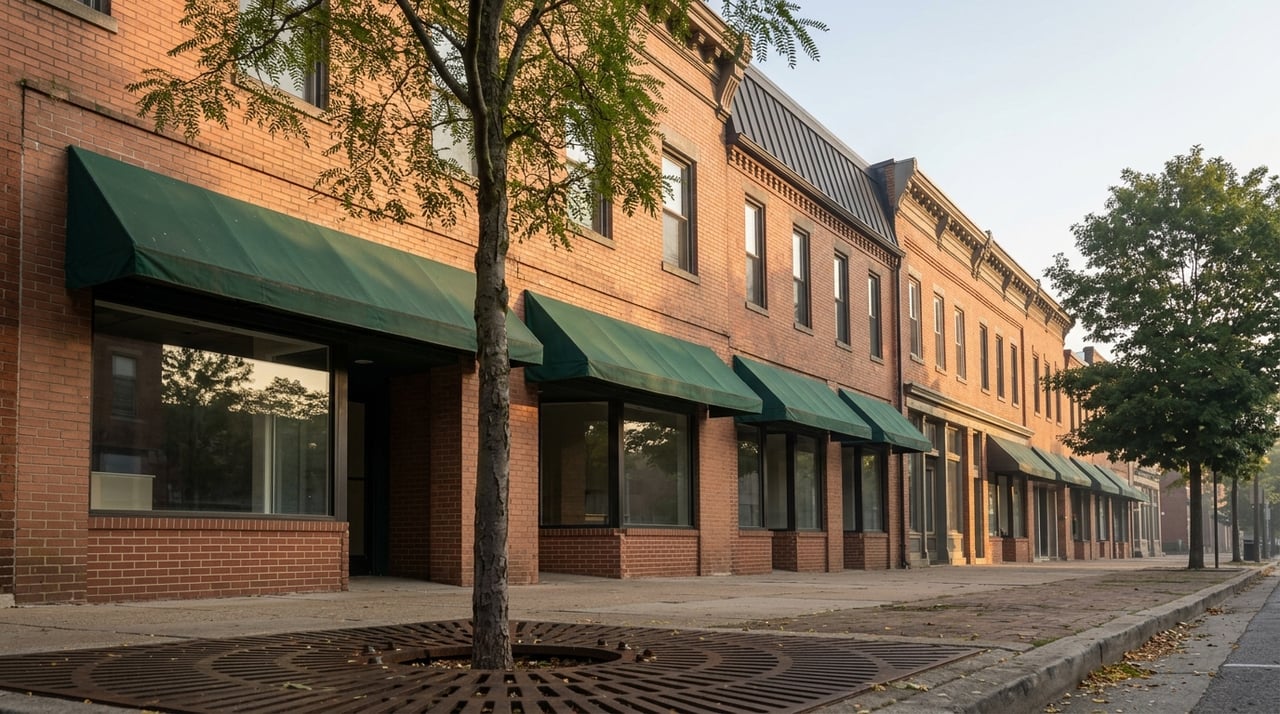
Lowell's Showboat City Social District covers Main Street from the Hudson Street intersection down to Washington Street, plus a stretch of the Riverwalk. Inside that boundary, adults can carry a beer or a glass of wine outdoors between participating businesses, something most Michigan downtowns still don't allow. The City of Lowell's page on the district lays out the one rule people tend to get wrong: you can't buy a drink at one restaurant and walk it into a different licensed establishment. You can absolutely carry it down the sidewalk, across Main Street, and onto a bench by the river. The restriction is about walking into someone else's dining room with an open cup, not about leaving the building at all.
That distinction matters because it's the difference between a district that only functions during a festival and one that functions on an ordinary Tuesday. A summer concert series needs good weather and a stage. A five-block zone where you can pick up dinner at one spot and finish a drink at another works in February as easily as July, and it's the reason downtown Lowell doesn't actually go dark once the bleachers at Riverwalk Plaza get put away for the year.
What actually changes after the last concert
Two things end when the Sizzlin' series wraps for the season: the Tuesday night crowd at Riverwalk Plaza, and the specific reason to bring a lawn chair downtown. Everything else on Lowell's civic calendar just keeps rolling, on a schedule that was already set before the concerts started.
Local & Late, the Lowell Area Chamber's monthly late-shopping night, runs the first Friday of every month year-round. The next one lands on September 4, with downtown merchants staying open until 8 p.m. Current participating businesses include Bobbie Sue's Roadhouse, Flat River Grill, Hop Hog Lowell, Los Portales Bar & Grill, New Union Brewery, and Sabor Mexicano, along with Sneaker's. It's not a seasonal promotion tied to warm weather. It's a standing commitment that outlasts the concert series by ten months a year.
Market on Main, the sidewalk sale that lines historic downtown with vendors, happens on the second Saturday of May, August, and September. The August date already passed, but the September edition falls on the 12th, giving shoppers one more outdoor market before the sidewalk sales pause until spring.
None of this is contingent on the temperature. The pattern in Lowell isn't that summer brings the town to life and fall lets it rest. It's that the town built two separate systems, one seasonal and visible from a mile away, and one structural and easy to overlook, and only the seasonal one actually stops.
The anchors that were here before any of this
Part of why the structural stuff holds up is that downtown Lowell isn't relying on new development to carry it. The buildings doing the anchoring predate the social district by more than a century.
The Lowell Area Historical Museum sits inside the Graham Home, built in 1873 and listed on the National Register of Historic Places. It's open Tuesday, Thursday, and Saturday afternoons from 1 to 4, and the exhibits inside cover the region's fur trade and early industry, the kind of local history that doesn't show up on a map app but explains why the town looks the way it does.
A few doors down, the North Country Trail Association keeps its national headquarters, with murals on the side of the building marking a trail that runs roughly 4,600 miles from Crown Point, New York to Lake Sakakawea in central North Dakota. Downtown Lowell sits close to the trail's midpoint, which means a hiker who started walking near the Atlantic could, in theory, be passing through the same five blocks as the Local & Late shoppers.
The Showboat itself has been rebuilt six times since it started as a Depression-era project to draw people downtown. Nearly a century later it's still doing that job, serving as the backdrop for the summer concerts and, once the weather turns cold, as the dock where Santa Claus greets visitors in December. The building changes shape every few decades. The role it plays in the calendar doesn't.
For anyone who wants a longer walk than five blocks, the Bradford Dickinson White Nature Preserve has trails worth the trip, and Arrowhead Golf Course winds through eighteen holes of wooded terrain, with the 11th and 18th holes locally regarded as two of the toughest greens in the state. Neither one depends on a summer schedule either.
The takeaway for anyone keeping track
If you live in Lowell and you're used to organizing your week around whatever's happening at Riverwalk Plaza, the end of the concert season can feel like the end of downtown's reason to exist for a few months. It isn't. The social district's boundaries don't move with the calendar. The first Friday of the month doesn't care if it's June or November. The Graham Home keeps the same hours whether there's a band playing outside or not.
What ends in late August is one program among several. What doesn't end is the set of decisions the city made five years ago about how a small downtown could function on a normal Tuesday, not just during a festival. That's the part worth knowing if you're trying to figure out what Lowell actually feels like to live in, as opposed to what it looks like during its one loudest month.
If you're weighing a move to a river town where the downtown doesn't rely on a single summer season to stay interesting, the team at West Michigan Homes and Land knows Lowell block by block, from the Riverwalk to Fallasburg. Reach out when you're ready to see what's on the market.