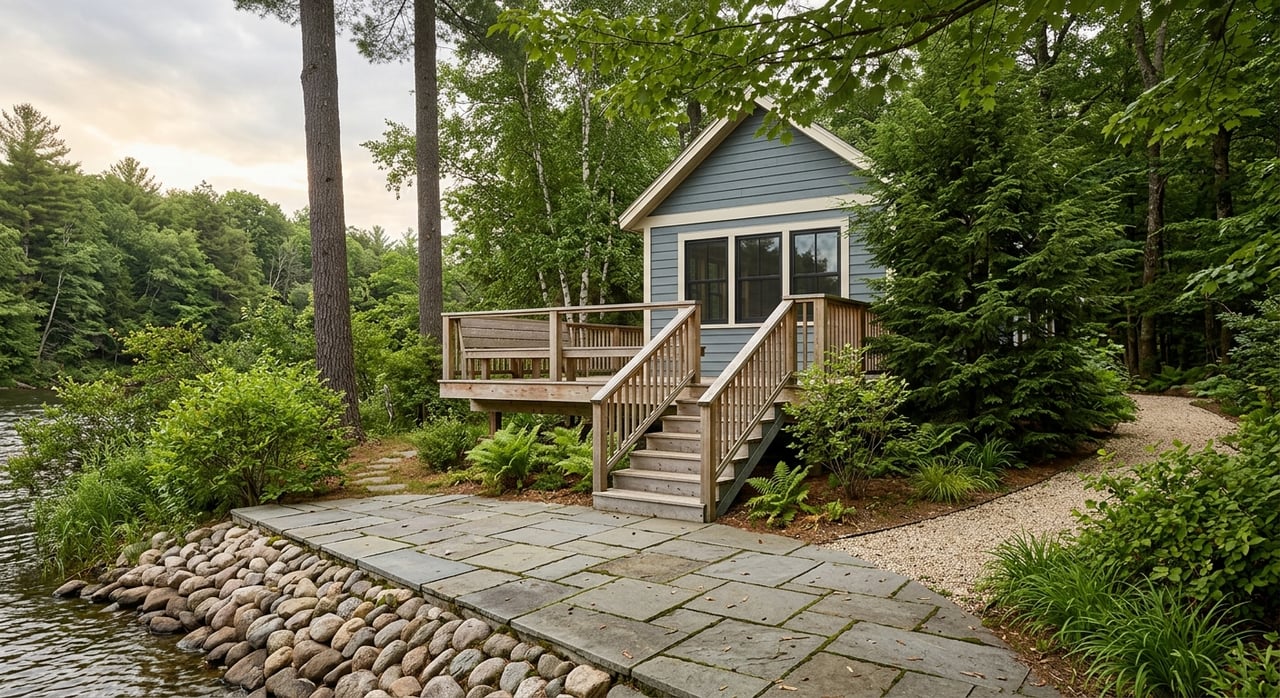
Dreaming about a home near the Rogue River in Rockford? You are not alone. This stretch of West Michigan blends small-town convenience with easy access to paddling, fishing, trails, and wooded scenery, which makes it easy to see the appeal. If you are thinking about buying here, it helps to understand not just the lifestyle, but also how river rules, lot layout, and due diligence can shape your options. Let’s dive in.
Why the Rogue River area stands out
The Rogue River near Rockford is best understood as a river-town corridor, not just a line of waterfront homes. The Michigan Department of Natural Resources identifies the Rogue as a major tributary of the Grand River that drains about 234 square miles in Kent and Newaygo counties. It is also one of Michigan’s 16 designated Natural River systems.
That designation matters for buyers because it helps preserve the natural character that draws people to the area in the first place. In and around Rockford, the river is tied closely to everyday recreation and the downtown experience. Local visitor information highlights canoeing, kayaking, innertubing, fishing, the Dam Overlook, and trail access along the river.
What living near the river feels like
For many buyers, the appeal goes beyond the house itself. You are buying into a setting where outdoor access is part of daily life, whether that means a morning walk, an evening paddle, or a weekend bike ride.
Rockford sits along the Fred Meijer White Pine Trail State Park, a 92-mile paved trail designed for biking, hiking, and wildlife viewing. In town, the Rogue River Nature Trail boardwalk, Peppler Park, and the Rockford Dam Overlook add to the area’s recreation options. If you enjoy fishing, paddling, or simply being close to the water, that corridor can offer a lot without needing a huge private yard to create the experience yourself.
Public improvements also help support access. River-trail features in Rockford were designed with easier public access in mind and include barrier-free concepts such as fishing platforms, observation decks, benches, and picnic tables. Nearby, the Rogue River State Game Area adds another layer of open space, with 6,135 acres in Kent County.
Riverfront versus river proximity
One of the biggest things to clarify early is whether a property is truly riverfront or simply near the river. A home may have water views, nearby trail access, or a short walk to the river without including deeded river access.
That distinction can affect value, use, and your future plans. If you picture launching a kayak from your own property or building a path to the water, you will want to verify exactly what rights come with the parcel. In this area, assumptions can lead to disappointment, so deeded access, easements, and parking should all be reviewed carefully.
How Natural River rules shape properties
The Rogue River’s Natural River designation affects how lots are used and improved. The current rules place the Rogue River district within lands up to 400 feet from the river’s edge. They also require a minimum 150-foot building setback from the mainstream and 100 feet from designated tributaries.
The rules also maintain a 50-foot natural vegetation strip on the mainstream and a 25-foot restrictive cutting belt on tributaries. For lots created after June 2, 1980, the standards call for at least 50,000 square feet in the district, along with enough frontage, depth, and upland area to accommodate the required setbacks.
In practical terms, that often means deeper wooded parcels and less open lawn stretching to the water. You may also see more emphasis on preserving trees, habitat, and filtered views rather than large hardscaped river edges. That can be a big plus if you want a more natural setting, but it can also limit what you can change later.
Why lot size can be misleading
A parcel can look generous on paper and still have a smaller practical building envelope. Setbacks, vegetation buffers, bluff restrictions, and the shape of the land all play a role.
On bluff-edge sites, the rules require a dwelling to sit at least 50 feet from the top of a bluff. They also restrict altering the bluff face and crest. So even if a lot appears large in the listing, the area where you can build, expand, or place outdoor features may be much tighter than expected.
This is especially important if you are comparing an existing home with a buildable lot. In both cases, you want to understand not just where the lot lines are, but where usable space actually begins and ends.
What outdoor improvements may be possible
Buyers are often drawn to the idea of adding a dock, stairs, a boardwalk, or opening up a bigger water view. Along the Rogue, those features are not always simple add-ons.
Under the rules, selective pruning is allowed over not more than a 50-foot width for a filtered river view. Limited, low-profile features may also be allowed, including one private boat dock per parcel, one private river-access stairway per parcel, and boardwalks associated with footpaths to the river’s edge. These items are regulated and size-limited, so it is smart to check them before you write an offer if they matter to your plans.
Floodplain and floodway questions to ask
If you are buying along or near a river, floodplain review should be part of your process. Michigan’s Department of Environment, Great Lakes, and Energy defines the floodplain as land that can be inundated by a 100-year flood.
Construction, fill, or alteration in the floodplain of a river, stream, or drain with a drainage area of at least 2 square miles generally requires a state floodplain permit. New residential construction is prohibited in the floodway. For buyers, this means you should confirm whether the home or lot is in the floodplain, whether any prior work was permitted properly, and how those conditions may affect future plans.
Shoreline and bank protection concerns
Riverbank erosion or unstable shoreline conditions can become a major cost issue if you do not spot them early. In Michigan, a permit is required to install or replace shoreline protection on inland lakes or streams.
State guidance also notes that vertical walls are generally not recommended because they can reduce habitat and contribute to erosion impacts on neighboring properties. If a property has visible bank work, retaining structures, or signs of erosion, it is worth asking what has been installed, whether permits were obtained, and what future maintenance may look like.
Septic, well, and land review matter here
Some buyers focus so much on the water that they overlook the basics of site function. For homes or parcels that rely on on-site systems, Kent County Health Department services can help determine whether a parcel is suitable for well and septic systems.
The county also reviews land divisions, subdivisions, and site condominiums through Environmental Health. It notes that real estate evaluations are often required before selling an existing building. If you are considering a vacant parcel, an older home, or a property with future expansion potential, this review can be just as important as the river frontage itself.
A smart Rogue River buying checklist
Before you move forward on a home along the Rogue River near Rockford, make sure you can answer these questions:
- Is the parcel in the Natural River District?
- Does the property include deeded river access or only river proximity?
- Is there enough frontage, depth, and upland area for required setbacks?
- Is the home or lot in the floodplain or floodway?
- Are well, septic, and any land-division approvals already in place?
- Would future improvements like a dock, stairs, boardwalk, or bank stabilization require permits?
- Have you verified easements, access points, and parking rights?
Why local guidance helps
Buying near the Rogue River is not just about finding a home with a pretty setting. It is about matching your lifestyle goals with the realities of the parcel, the rules, and the long-term upkeep that can come with riverfront or river-adjacent property.
That is where local, property-specific guidance can make the process smoother. When you understand access, buildability, setbacks, and improvement limits before you buy, you can make a more confident decision and avoid surprises after closing.
If you are exploring homes, land, or river-adjacent properties in Rockford and across West Michigan, Steven A Elder can help you sort through the details and find a property that fits both your goals and the setting.
FAQs
What makes buying a home near the Rogue River in Rockford different?
- Homes near the Rogue River may be affected by Natural River rules, setback requirements, vegetation buffers, floodplain concerns, and access questions that do not apply to many standard residential properties.
What should you verify about Rogue River access before buying?
- You should confirm whether the property has deeded river access, easements, and any related parking or use rights rather than assuming that river proximity includes private access.
What setback rules can affect homes along the Rogue River?
- The current rules include a 150-foot building setback from the mainstream, 100 feet from designated tributaries, and additional vegetation and bluff-related restrictions that can reduce the practical building area.
What improvements might require approval near the Rogue River?
- Features like docks, river-access stairs, boardwalks, shoreline protection, tree clearing, additions, and some earth-moving or land changes may be regulated and should be checked before purchase.
What floodplain issue should buyers watch for along the Rogue River?
- Buyers should verify whether a home or parcel is in the floodplain or floodway because permits may be required for certain work in the floodplain, and new residential construction is prohibited in the floodway.
What county review may matter for Rogue River properties in Kent County?
- Kent County Health Department review may be important for well and septic suitability, land divisions, subdivisions, site condominiums, and real estate evaluations tied to existing buildings.